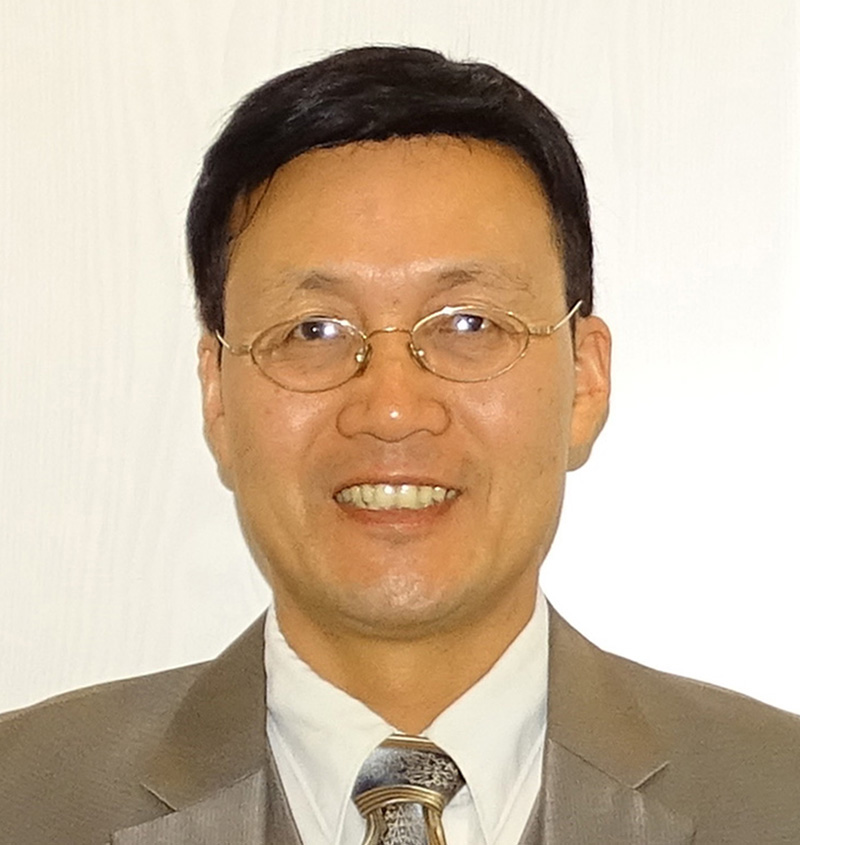
Professor Jindong Chen, Ph.D.
National Class A Foreign Expert |Core Expert, Guizhou Medical & Health Expert Group | Migrant Scholar,Zunyi Medical University | Senior Member, American Association for CancerResearch (AACR)
Executive Summary
Professor Chen brings over three decades of international expertisein molecular medicine, medicinal chemistry, mouse modeling, and oncology drugdiscovery. Prior to leading corporate R&D strategies, he held pivotalacademic and research appointments at elite institutions across Sweden,Singapore, and the United States. His scientific discoveries encompass thecloning of four kidney cancer-associated genes, the development of flagshiptransgenic mouse models, and more than 120 peer-reviewed publications in elitejournals such as Nature Genetics, Cancer Cell,and Cancer Research.
Executive R&D Leadership (2016 – Present)
Chief Technology Officer
Directs corporate R&D strategies across anti-tumor metastasis,advanced diabetic wound healing, and anti-viral (COVID-19) therapeuticplatforms.
-
Platform Architecture: Built and optimized high-throughput in vitro cell screening systems, multi-tiered validation platforms, a medicinal chemistry pipeline, and over 10 distinct in vivo animal metastasis models.
-
Drug Discovery & Optimization: Executed large-scale screening campaigns across four drug libraries (20,000+ small-molecule compounds), driving lead optimization for oncology, wound repair, and anti-viral programs.
-
Intellectual Property: Secured nearly 30 national patents protecting novel small molecules, drug candidates, and assay platforms.
Key Scientific Contributions & Impact
Gene Discovery & Positional Cloning
-
Independently cloned or co-cloned four major kidney cancer-associated genes: NORE1, LSAMP, HRPT2, and FLCN.
Custom Transgenic & Knockout Mouse Models
-
Engineered an extensive portfolio of kidney-cancer-targeted mouse models utilizing advanced gene targeting technology:
-
Single-Gene Knockouts: Flcn-Sglt2-Cre, Flcn-Ksp-Cre, Flcn-ER-Cre, Flcn-CMV-Cre, Vhl-Sglt2-Cre, Hrpt2-CMV-Cre, Pbrm1-Ksp-Cre, Pbrm1-Sglt2-Cre, Pbrm1-CMV-Cre
-
Double-Gene Knockouts: Vhl-Flcn double-knockout and Vhl-Pbrm1 double-knockout models
-
Global Translational Impact: Donated the Flcn gene-targeted mouse model (Strain: 028718 - B6.129S4(SJL)-Flcntm1Btt/JdchJ) to The Jackson Laboratory, which has since been adopted by major international pharmaceutical firms for oncology drug development.
Professional Experience & Career Highlights
-
2011 – 2016 | Associate Research Professor & Co-Director
Renal Cancer Research Laboratory, Department of Urology, Universityof Rochester Medical Center (USA)
-
2011 | Senior Research Fellow
National Cancer Centre Singapore & Joint Graduate School ofDuke-NUS (Singapore/USA)
-
2000 – 2010 | Research Scientist & Postdoctoral Fellow
Van Andel Institute (USA)
-
1990 – 1995 | Associate Professor / Assistant Professor / Lecturer
School of Medicine, Southeast University (China)
-
Promoted ahead of regular tenure track; named "Model Excellent Teacher" and selected as "Ministry-level Key Talent for Priority Cultivation."
-
Built foundational departmental tech platforms covering molecular hybridization, PCR, DNA synthesis, and sequencing.
-
Published 30+ papers in 5 years and received 3 provincial/ministerial science awards.
Education
-
Ph.D. in Molecular Medicine (2000) — Karolinska Institute (Sweden)
-
M.S. in Medicine (1990) — School of Medicine, Southeast University (China)
-
B.S. in Biochemistry (1987) — Lanzhou University (China)
Honors, Awards & Academic Output
-
Selected Honors:
-
AACR-Sanofi-Aventis Scholar Award (2009)
-
AACR Press Conference Featured Speaker (2003)
-
AACR-Bristol-Myers Squibb Oncology Scholar Award (2003)
-
Publications: 120+ peer-reviewed papers in top-tier journals (Nature Genetics, Cancer Cell, Cancer Research, Kidney International).
-
Selected Monographs & Textbooks:
-
Latest Reviews on Colorectal Cancer (2026)
-
Advances in Diagnosis and Therapy of Colorectal Carcinoma (2024)
-
Renal Cell Carcinoma (2023)
-
Colorectal Cancer (2018)
-
Renal Tumor (2013)
-
Introduction to Human Genetics (1996)